Ingredients
Equipment
Method
Prepare the oven
- Preheat the oven to 375°F (190°C). Line two baking sheets with parchment paper and set them aside. If you're planning to make éclairs, fit a pastry bag with a large round or French star tip before preparing the dough.
Heat the liquid ingredients
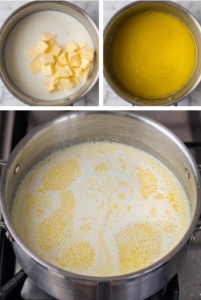
- In a medium saucepan, combine the water, butter, sugar, and salt. Bring the mixture to a full rolling boil over medium heat, making sure the butter has completely melted before continuing.
Tip: The liquid should be actively boiling before adding the flour. Starting with a full boil helps hydrate the flour evenly and contributes to a smooth, stable dough.
Cook the panade
- Remove the saucepan from the heat and immediately add all of the sifted flour. Stir vigorously with a wooden spoon until no dry flour remains.
- Return the pan to medium-low heat and continue stirring constantly for about 2 minutes. The dough should come together into a smooth ball and leave a thin film on the bottom of the saucepan.
Tip: This cooking stage removes excess moisture from the dough. If skipped or shortened, the finished pastries may not puff properly.
Cool the dough
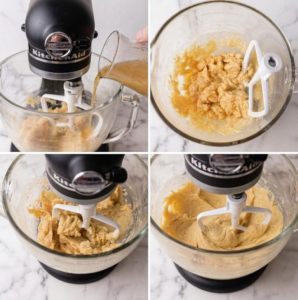
- Transfer the dough to the bowl of a stand mixer fitted with the paddle attachment.
- Mix on low speed for 2–3 minutes until much of the steam has escaped and the dough feels warm rather than hot.
Incorporate the eggs
- Add the beaten eggs gradually, mixing well after each addition.
- At first the dough will look separated and slippery, but continue mixing until it becomes smooth before adding more egg.
- After the final addition, the dough should be glossy, thick, and slowly fall from the paddle in a smooth "V" shape.
Tip: Depending on the size of your eggs and the amount of moisture remaining in the dough, you may not need the entire fifth egg. Always judge the consistency rather than relying only on the ingredient list.
Pipe the pastry
- Transfer the dough to the prepared pastry bag.
- Pipe 1½-inch rounds for cream puffs or 5-inch strips for éclairs, leaving enough space between each pastry for expansion.
- If peaks remain after piping, gently smooth them with a fingertip dipped in water.
Bake
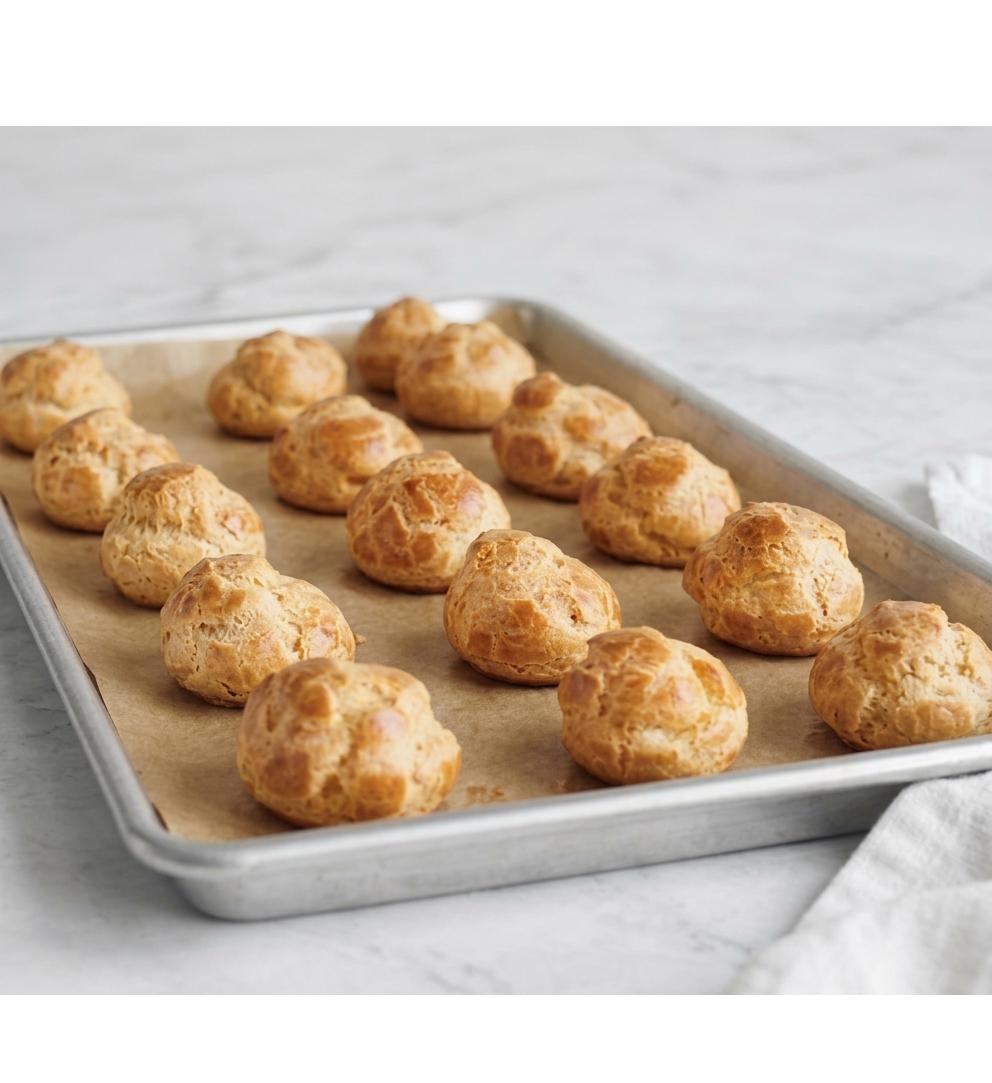
- Bake for 30–35 minutes until the pastries are deep golden brown, feel light when lifted, and sound slightly hollow when tapped.
- Do not open the oven during the first 25 minutes of baking.
Tip: Opening the oven too early releases steam before the pastry structure has set, causing the shells to collapse.
Dry the shells
- Remove the pastries from the oven and immediately pierce a small hole in the side or bottom of each shell.
- Return them to the turned-off oven with the door slightly ajar for about 5 minutes to release excess steam and dry the interiors.
Cool completely
- Transfer the pastries to a wire rack and allow them to cool completely before filling.
- The finished shells should feel crisp, lightweight, and hollow inside, making them ideal for pastry cream, whipped cream, chocolate mousse, or savory fillings.
Notes
- Room-temperature eggs incorporate more easily and produce a smoother dough.
- Measure the flour accurately for consistent results. Too much flour can make the pastry dense and limit its rise.
- Properly cooked choux shells can be stored in an airtight container at room temperature for up to one day or frozen for up to two months.
- To restore crispness, reheat unfilled shells in a 300°F (150°C) oven for 5–8 minutes, then cool completely before filling.
- Fill the pastries as close to serving time as possible to maintain their crisp texture.
- If the dough feels too stiff after adding four eggs, gradually add the fifth egg a little at a time until the proper consistency is reached.
- This recipe serves as the foundation for cream puffs, éclairs, profiteroles, Paris-Brest, gougères, and many other classic French pastries.