
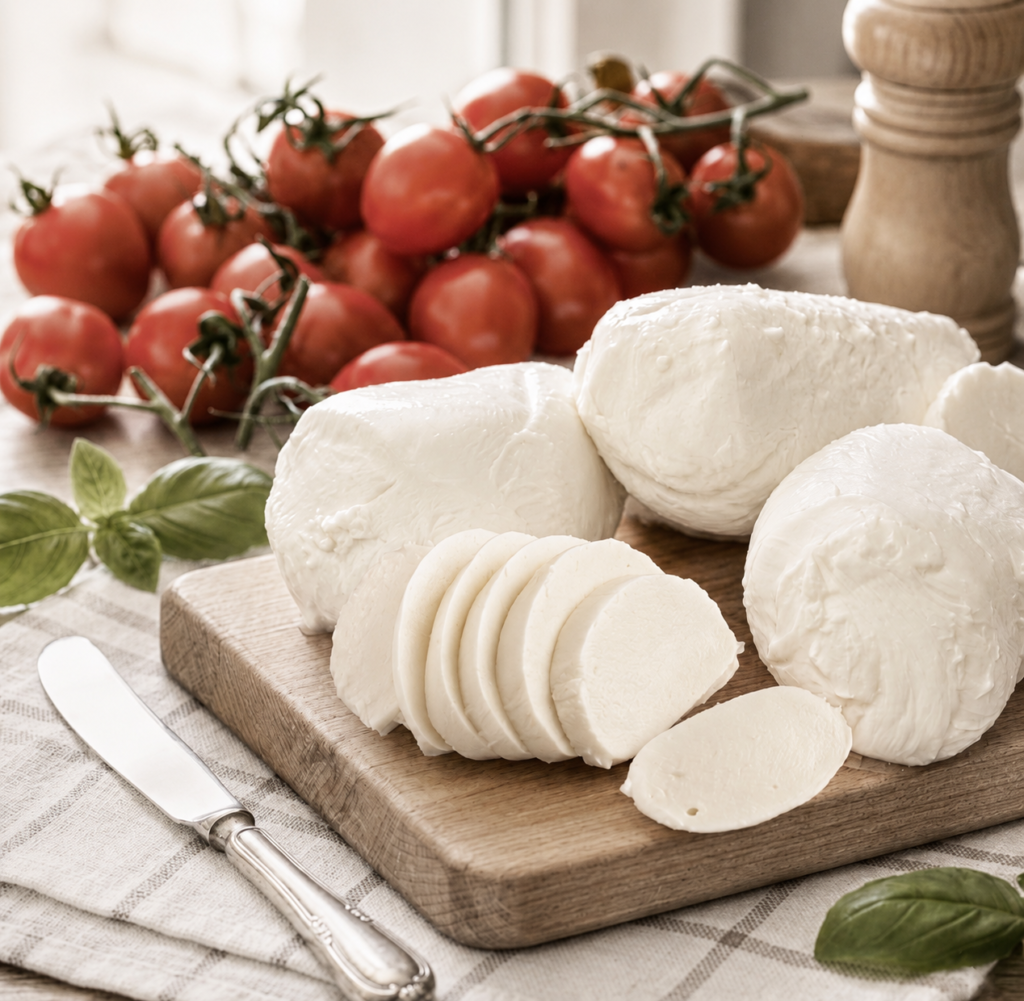
Fresh homemade mozzarella is one of those recipes that feels almost magical the first time you make it. Watching a pot of milk transform into soft curds before stretching into smooth, glossy cheese is surprisingly satisfying, and the finished mozzarella has a delicate flavor and creamy texture that’s difficult to match with most store-bought versions. While fresh mozzarella may seem like something reserved for artisan cheesemakers, this simplified method makes it completely achievable in an ordinary home kitchen.
Unlike aged cheeses that require weeks or even months of patience, this homemade mozzarella comes together in about 30 minutes using only a handful of ingredients. Whole milk, vinegar, salt, and water are all you need to create a fresh cheese that’s tender, mildly milky, and wonderfully versatile. The process itself is straightforward, but paying attention to temperatures and texture cues makes all the difference between curds that stretch beautifully and curds that simply crumble.
One of the most rewarding parts of making mozzarella at home is learning how the cheese changes throughout the process. At first, the milk appears unchanged, but as the acid works with the heated milk, soft curds begin separating from the clear whey. Later, gentle stretching transforms those curds into the smooth, elastic texture that fresh mozzarella is known for. Understanding these visual changes helps build confidence and makes the recipe far easier to repeat successfully.
Fresh homemade mozzarella also allows complete control over the ingredients. Because it’s made from scratch, you can avoid unnecessary additives commonly found in commercial products while enjoying a fresher, cleaner dairy flavor. Choosing high-quality whole milk plays an especially important role, as the milk itself becomes the primary source of flavor in the finished cheese.
Whether you’re preparing a classic Caprese salad, topping homemade pizza, layering sandwiches, or simply serving slices with olive oil and flaky salt, this mozzarella offers a freshness that’s difficult to buy. Once you experience the delicate texture and subtle richness of cheese you’ve made yourself, it’s easy to understand why homemade mozzarella has remained a favorite among home cooks for generations.
WHY HOMEMADE MOZZARELLA IS WORTH MAKING
Fresh mozzarella is one of the few cheeses that allows home cooks to enjoy professional-quality results without specialized equipment or months of aging. In less than an hour, simple pantry ingredients become a soft, creamy cheese with the signature stretch and delicate flavor that define authentic fresh mozzarella. That transformation is not only satisfying to watch, but also helps build confidence in basic cheesemaking techniques.
Another advantage of making mozzarella at home is complete control over the ingredients. Because the recipe relies on just a few components, each one plays an important role in the final result. Using fresh whole milk creates a richer flavor and smoother texture, while careful temperature control encourages proper curd formation without making the cheese tough or grainy. Understanding these small details allows even beginners to achieve consistent results.
Homemade mozzarella is also remarkably versatile. It can be enjoyed immediately while still slightly warm, chilled for salads, melted over pizza, layered into sandwiches, or served as part of an elegant cheese board. Its mild flavor pairs beautifully with tomatoes, basil, olive oil, roasted vegetables, cured meats, and countless other ingredients, making it one of the most useful fresh cheeses to have on hand.
Learning this recipe also introduces many of the core principles used in traditional cheesemaking. Watching milk separate into curds and whey, learning how gentle stretching develops elasticity, and recognizing the visual cues that indicate the cheese is ready all help develop valuable kitchen skills that can be applied to other homemade dairy recipes.
Perhaps the greatest reward, however, is the texture itself. Fresh homemade mozzarella has a softness and creaminess that commercial versions rarely achieve. When stretched correctly, the cheese becomes smooth, glossy, and pleasantly elastic while maintaining a delicate milky flavor that shines in both simple and elaborate dishes. It’s a rewarding recipe that combines technique, craftsmanship, and exceptional flavor in every batch.
Homemade Mozzarella
Ingredients
Equipment
Method
- Pour the milk into a large heavy-bottomed pot and slowly heat over medium-low heat, stirring occasionally to prevent scorching. Heat until the milk reaches 120°F (49°C).
- Remove the pot from the heat and immediately stir in the vinegar using slow, gentle motions for about 30 seconds.
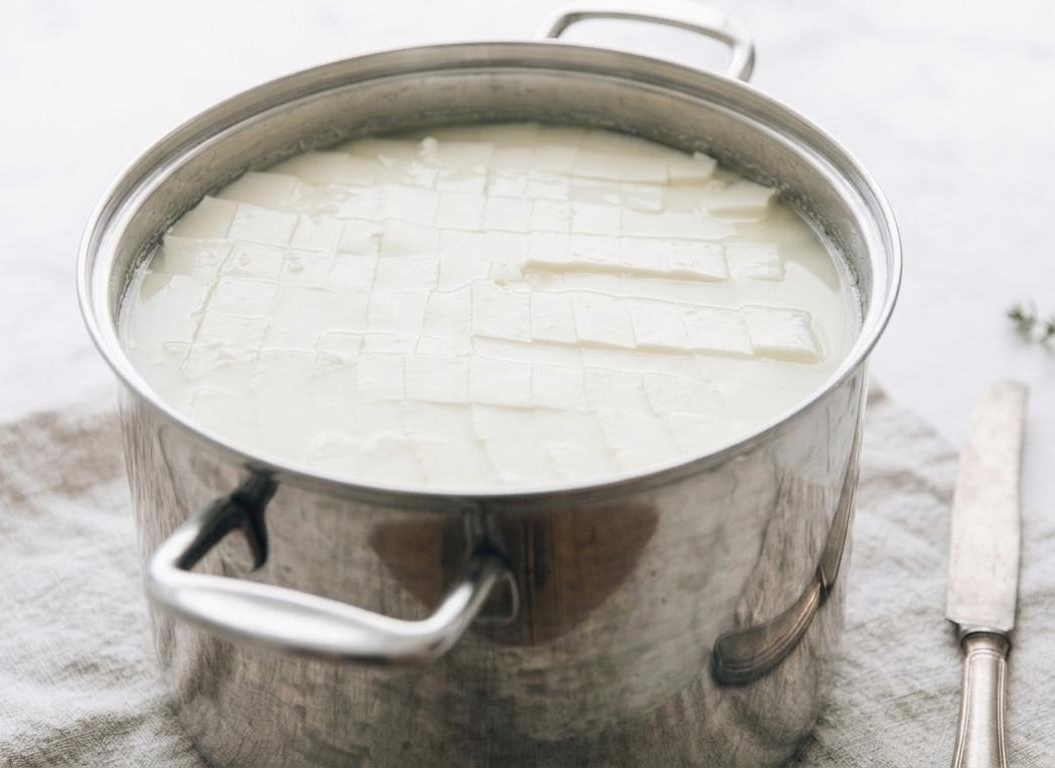
- Allow the milk to rest undisturbed for 15 minutes. During this time the curds should separate from the yellowish whey.
- Using a slotted spoon, carefully transfer the curds into a fine-mesh strainer or bowl. Let the excess whey drain naturally without squeezing aggressively.
- Mix in the salt if using.
- Heat water to 170–180°F (77–82°C).
- Submerge the curds for 30–60 seconds until they become soft and flexible.
- Using gloved hands or two wooden spoons, gently stretch and fold the curds several times until the cheese becomes smooth, glossy, and elastic.
- Repeat the heating and stretching process as needed until the mozzarella develops a silky, shiny surface.
- Avoid excessive stretching, which can make the cheese firmer than desired.
- Fold the cheese underneath itself to create a smooth ball.
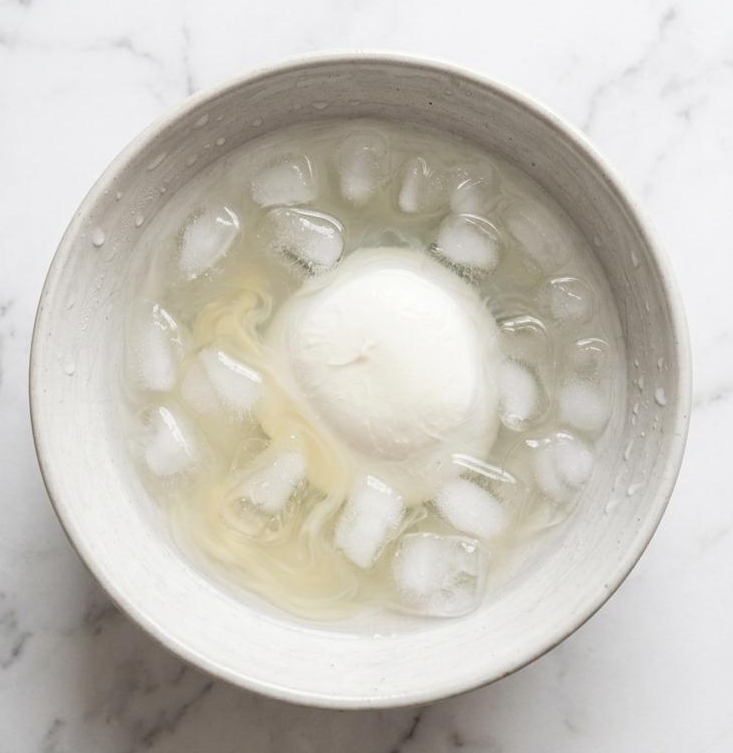
- Transfer immediately to an ice bath for about 10 minutes to help the mozzarella hold its shape while preserving its tender interior.
- Serve immediately or refrigerate until ready to enjoy.
Notes
 • Always use full-fat whole milk that is not ultra-pasteurized, as ultra-pasteurized milk often fails to produce proper curds.
• The whey should appear mostly clear with a slight yellow tint. Cloudy whey may indicate the curds need additional resting time.
• Stretch only until the cheese becomes smooth and glossy. Overworking the curds can create a tougher texture.
• Fresh mozzarella is at its absolute best within the first 24 hours, when its flavor and texture are at their peak.
• Store refrigerated in an airtight container for up to 3 days. For best results, keep it submerged in lightly salted water or whey.
• Leftover whey can be used in bread dough, pizza dough, soups, smoothies, or other baking recipes.
• Always use full-fat whole milk that is not ultra-pasteurized, as ultra-pasteurized milk often fails to produce proper curds.
• The whey should appear mostly clear with a slight yellow tint. Cloudy whey may indicate the curds need additional resting time.
• Stretch only until the cheese becomes smooth and glossy. Overworking the curds can create a tougher texture.
• Fresh mozzarella is at its absolute best within the first 24 hours, when its flavor and texture are at their peak.
• Store refrigerated in an airtight container for up to 3 days. For best results, keep it submerged in lightly salted water or whey.
• Leftover whey can be used in bread dough, pizza dough, soups, smoothies, or other baking recipes.
TIPS FOR THIS RECIPE
- Use the Right Milk. The type of milk you choose has the greatest impact on the final result. Whole milk that has been pasteurized—but not ultra-pasteurized—contains proteins that coagulate properly when the vinegar is added. Ultra-pasteurized milk has been heated to much higher temperatures, altering those proteins and making it much more difficult for firm curds to develop. If your mozzarella doesn’t form correctly, the milk is often the first thing to check.
- Heat the Milk Gently. Slow, even heating encourages smooth curd formation and helps prevent scorching on the bottom of the pot. Stir occasionally as the milk warms, but avoid vigorous mixing that can interfere with the delicate coagulation process. A reliable instant-read thermometer is one of the most valuable tools for this recipe because even small temperature differences can affect the texture.
- Don’t Rush the Stretching. Stretching develops the mozzarella’s signature smooth, elastic texture, but it should never be forced. The curds should feel soft and pliable before you begin. If they resist stretching or begin tearing, simply return them to the hot water for another 20 to 30 seconds. Working patiently produces a silkier cheese with a more delicate bite.
- Stop When the Cheese Looks Gloss. Many first-time cheesemakers continue stretching far longer than necessary. Once the mozzarella develops a smooth, shiny surface and stretches easily, it’s ready. Continuing beyond this point can squeeze out moisture and produce a firmer, less creamy cheese. The goal is a soft, supple texture rather than a dense ball.
- Cool It in Ice Wate. An ice bath quickly sets the shape while helping preserve the cheese’s delicate texture. Cooling too slowly allows the mozzarella to continue softening, which can make it lose its round shape. Ten minutes is usually enough to firm the exterior while keeping the inside tender and creamy.
- Enjoy It Fresh. Fresh mozzarella reaches its peak flavor within the first day. Its delicate milky taste and soft texture are most noticeable shortly after it’s made. Although it can be refrigerated for several days, serving it the same day provides the closest experience to freshly made artisan mozzarella.
SERVING IDEAS FOR HOMEMADE MOZZARELLA
- Slice the mozzarella and serve it with ripe tomatoes, fresh basil, extra virgin olive oil, and flaky sea salt for a classic Caprese salad.
- The simplicity of the ingredients allows the fresh cheese to shine. Layer slices onto homemade pizza during the final minutes of baking.
- Fresh mozzarella melts beautifully while maintaining small creamy pockets rather than becoming oily.
- Arrange it on a cheese board with cured meats, roasted peppers, marinated olives, toasted bread, and seasonal fruit for elegant entertaining.
- Add thick slices to panini or grilled sandwiches.
- The gentle melting creates a creamy interior without overpowering the other ingredients. Pair it with roasted vegetables such as zucchini, eggplant, peppers, or asparagus.
- The fresh cheese balances the caramelized flavors beautifully.
- Serve with warm crusty bread, high-quality olive oil, balsamic glaze, and cracked black pepper as a simple appetizer that highlights the mozzarella’s delicate flavor.
- Tear the mozzarella over fresh pasta just before serving so the residual heat softens the cheese without fully melting it.
- Use it in homemade lasagna or baked pasta dishes where its creamy texture creates pockets of rich dairy flavor throughout the casserole.
RECIPE QUESTIONS
Why didn’t my curds separate?
Curds usually fail to form because the milk was ultra-pasteurized, the temperature was incorrect, or the vinegar wasn’t added at the proper stage. Always use whole milk that is not ultra-pasteurized and verify the temperature with an instant-read thermometer before adding the acid. If the curds still appear very soft, allowing the mixture to rest a few extra minutes may improve separation.
Why isn’t my mozzarella stretching?
Stretching only works once the curds are warm enough. If they feel firm or begin breaking apart, return them to the hot water for another 20 to 30 seconds before trying again. The cheese should become soft, flexible, and slightly glossy before stretching comfortably.
Can I make homemade mozzarella ahead of time?
Yes. Fresh mozzarella can be prepared a day in advance and refrigerated in an airtight container. For the best texture, keep it submerged in lightly salted water or reserved whey. Although it remains delicious for several days, it has the softest texture and freshest flavor within the first 24 hours.
Can I freeze homemade mozzarella?
Freezing is possible, but it changes the texture. Once thawed, the cheese becomes slightly firmer and releases more moisture. Frozen mozzarella is best used for cooked dishes such as pizza, baked pasta, or casseroles rather than fresh salads or cheese boards.
What can I do with the leftover whey?
Whey is surprisingly versatile and doesn’t need to be discarded. It can replace water in bread or pizza dough, be added to soups, blended into smoothies, or used in baking recipes where a mild dairy flavor is welcome. Storing it in the refrigerator for several days allows you to make good use of every part of the recipe.
How should I store homemade mozzarella?
Store the mozzarella in an airtight container in the refrigerator, ideally submerged in lightly salted water or reserved whey to help maintain moisture. Enjoy it within two to three days for the best flavor and texture, allowing it to sit at room temperature for about 20 minutes before serving.
DID YOU MAKE THIS RECIPE?
Making fresh mozzarella at home is a rewarding experience, and we’d love to hear how your batch turned out. If you tried this recipe, please consider leaving a star rating and sharing your experience in the comments. Your feedback helps other readers understand what to expect and gives us valuable insight as we continue developing reliable, carefully tested recipes for The Sofî Edit.
If you made any adjustments—such as using a different type of milk, serving the mozzarella in a favorite dish, or experimenting with new flavors—we’d love to hear about them. Every kitchen is a little different, and your experience may help another home cook succeed.
Don’t forget to save this recipe for future cheesemaking projects and share a photo of your finished mozzarella. Seeing your creations is one of the most rewarding parts of building The Sofî Edit community, and we truly enjoy celebrating your successes in the kitchen.see your version.
Leave a Reply